


Department News

A recent study in Chemical Research in Toxicology looks at environmental health by mapping the wide range of chemicals that children are exposed to in everyday life.
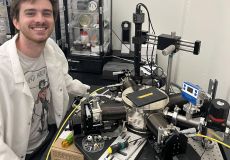
In a step toward smaller and more controllable quantum devices, researchers at UNC-Chapel Hill have found a new way to generate and control tiny sound waves using superconducting materials.

Researchers in Professor Matthew Redinbo’s Lab in the Department of Chemistry at UNC-Chapel Hill, along with collaborators in the School of Medicine, have discovered that differences in gut bacteria, collectively known as the microbiome, may help explain why some people experience more gut toxicity than others.
Samantha McDonald, a postdoctoral research associate in chemistry at UNC-Chapel Hill, has been awarded a 2026 Arnold O. Beckman Postdoctoral Fellowship in Chemical Sciences, one of the most prestigious awards for early-career scientists in chemistry who are opening new directions in research, from the Arnold and Mabel Beckman Foundation.
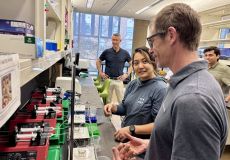
A team of engineers, chemists and physicians at UNC-Chapel Hill is developing a breakthrough membrane technology that could shrink today’s refrigerator-sized dialysis machines into a wearable, smartphone-sized artificial kidney—potentially transforming care for hundreds of millions of patients worldwide.

Researchers in the Moran Lab have demonstrated a new way to encode information in light using a class of materials known as two-dimensional perovskites.
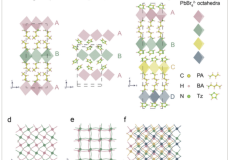
A Department of Chemistry study is shedding light on how a special class of materials called perovskites could help improve future optical technologies, from advanced sensors to telecommunications devices.
At a conference celebrated for scientific breakthroughs, graduate students are turning the spotlight onto the hidden risks faced by scientists.
Research

Herein, an approach for discriminating between tardigrade morphological states is developed and utilized to compare sucrose- and CaCl2-induced tuns, using the model species Hypsibius exemplaris.

Herein, we disclose a backbone rearrangement approach to tune the short-chain branching of polymers.
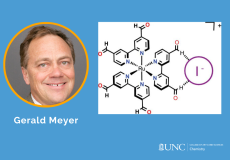
A new homoleptic Ru polypyridyl complex bearing two aldehyde groups on each bipyridine ligand, [Ru(dab)3](PF6)2, where dab is 4,4′-dicarbaldehyde-2,2′-bipyridine, was synthesized, characterized, and utilized for iodide photo-oxidation studies.

Here, we propose a model where the relaxation of polymer gels in the dilute regime originates from elementary events in which the bonds connecting two neighboring cross-linkers all disconnect.
Connect