

Hettleman Prize Winner Lindsey James and the Chemistry That Decides Who We Are

The lab of Lindsey James, a Ph.D. graduate of the Department of Chemistry and an associate professor in the UNC Eshelman School of Pharmacy, has successfully targeted a protein called NSD2, which helps regulate genes involved in cell growth and has been implicated in a number of different cancers, including multiple myeloma and prostate cancer, among others.
February 3, 2026 | By Dave DeFusco
When Lindsey James began studying the chemistry that controls our genes as a Ph.D. student in the Waters Group in UNC’s Department of Chemistry, she stepped into a scientific frontier filled with unanswered questions. Scientists knew that genes mattered, but they were only beginning to understand how cells decided which genes to use, when to use them and when to keep them silent.
Today, James is an associate professor in the UNC Eshelman School of Pharmacy and one of the world’s leading chemical biologists developing chemical tools to study how those decisions are made and what happens when they go wrong. Her work has earned her the Hettleman Prize for Artistic and Scholarly Achievement, one of UNC’s most prestigious honors, awarded to exceptional early-career faculty whose research has already made a significant impact.
At the center of James’s research is something called the epigenome. If DNA is the instruction manual of life, the epigenome is the system that decides which instructions get read. Every cell in the human body contains the same DNA, but a brain cell behaves very differently from a skin cell or a liver cell. The reason lies in the epigenome.
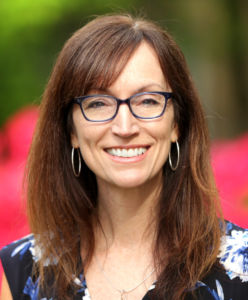
“The epigenome is a critical determinant of cell fate and identity,” said James. “It plays a central role in everything from development to diseases such as cancer and HIV.”
To understand the epigenome, it helps to picture how DNA is stored inside a cell. Rather than floating freely, DNA is tightly wrapped around spool-like proteins called histones, forming a structure known as chromatin. Chemical tags can be added to the DNA and histones. These tags act like bookmarks or sticky notes, telling the cell which genes to read and which to ignore.
In healthy cells, this system is carefully balanced. But when those chemical marks are misplaced or misread, problems can arise. Genes that should be silent may turn on, or essential genes may shut down entirely. “This kind of disruption is a common feature in many cancers,” said James.
Her lab largely focuses on a specific group of proteins known as methyl-lysine reader proteins, or Kme readers. These proteins don’t necessarily change the chemical tags themselves. Instead, they “read” the tags and translate them into action, telling the cell to activate or silence certain genes. When misregulated, Kme reader proteins can be drivers of disease. The challenge is that many of these reader proteins have long been considered “undruggable.” In other words, scientists don’t always know how to design molecules that can attach to them in a precise and useful way to block their function.
“That’s where our work comes in,” said James. “We’re developing chemical probes—molecules that can bind to these proteins and help us understand what they’re doing inside cells and potentially be translated into new therapies.”
These probes act like flashlights in a dark room. They allow researchers to determine how a protein behaves and what happens when it is blocked or removed. Over the past several years, James’s lab has developed multiple first-in-class chemical probes, meaning they are the first of their kind to successfully target a specific protein.
One major success involves a protein called NSD2, which helps regulate genes involved in cell growth and has been implicated in a number of different cancers, including multiple myeloma and prostate cancer, among others. When NSD2 becomes overactive, it can drive cancer by turning on genes that should remain quiet. Working with collaborators at the University of Toronto, James’ team tested more than 200 compounds before discovering UNC6934, a molecule that binds a key part of NSD2 and helps disrupt its interaction with chromatin.
“It was the first chemical probe for NSD2,” said James, “and now it’s being used by labs around the world to better understand how NSD2 contributes to cancer.”
Beyond blocking harmful proteins, James’s lab is also exploring an even bolder strategy: chemical degraders. Rather than merely stopping a protein from working, these molecules cause the cell to destroy the protein entirely.
“Traditional drugs often block a single protein function,” said James, “but degraders can remove the protein altogether, which can be more effective and longer lasting.”
One such degrader, UNC8732, targets NSD2 and has shown the ability to trigger cancer cell death in early laboratory studies. The approach works by hijacking the cell’s natural waste-disposal system. “It’s like putting a ‘delete’ tag on a bad actor,” she said.
James credits much of her success to collaboration and mentorship, especially her doctoral training in the lab of Dr. Marcey Waters, the Glen H. Elder, Jr. Distinguished Professor in UNC’s Department of Chemistry, and her postdoctoral training in the lab of Dr. Stephen Frye, Eshelman Distinguished Professor in UNC’s School of Pharmacy who also holds a Ph.D. from the Department of Chemistry.
“Working in Marcey Waters’ lab taught me how to think about science at the most fundamental level,” said James. “I learned how to tackle problems carefully, ask the right questions, design the right experiments and think carefully about the data. She was a wonderful mentor and I’m forever grateful for the skills I gained in her lab.”
Marcey Waters, Glen H. Elder, Jr. Distinguished Professor of Chemistry at UNC, said that James as a student approached science with rigor, creativity and intellectual fearlessness. “Watching her build a research program that opens entirely new directions in chemical biology—and seeing the impact it’s having on cancer and HIV research—has been very rewarding,” said Waters. “She exemplifies what it means to be an outstanding scientist and mentor.”
Though her research has evolved far beyond her Ph.D. work, James says the foundation she gained in the Waters Lab still shapes how she approaches science today. Now, as director of chemical biology at the Center for Integrative Chemical Biology and Drug Discovery in the Eshelman School of Pharmacy, James continues to bridge basic research and real-world therapies. For her, the excitement lies in discovery itself.
“What drew me in was the idea that we could make real, impactful discoveries,” she said. “We’re not just trying to make incremental improvements; we’re exploring new biology and working toward novel therapies to improve human health.”