

Study Uses Advanced Tech to Map Everyday Chemical Exposures in Early Childhood
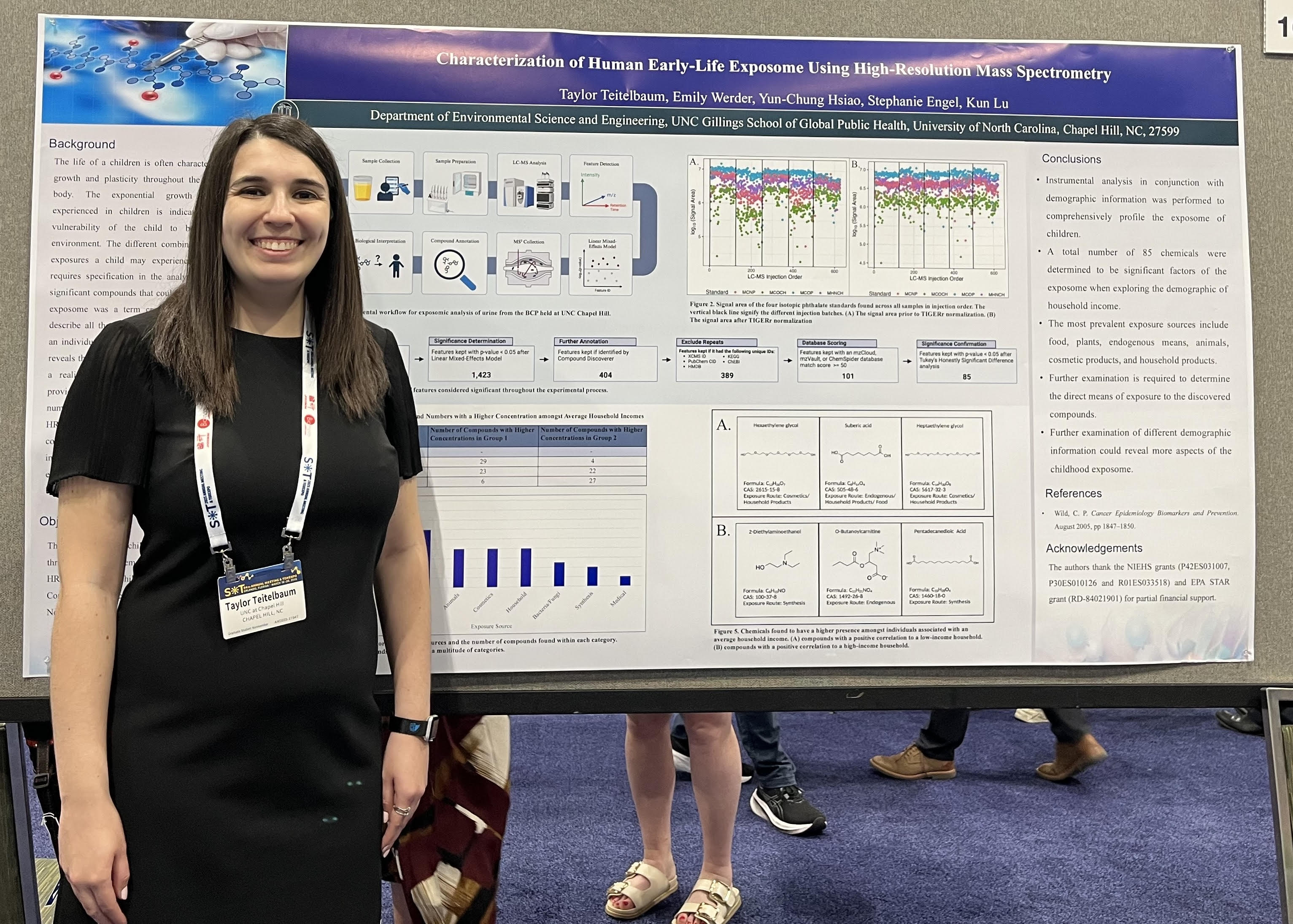
Taylor Teitelbaum's study in Chemical Research in Toxicology focuses on what scientists call the exposome, which refers to all the environmental exposures a person experiences over their lifetime. Instead of looking for just a few known chemicals, her team used an expansive approach to capture as many as possible.
April 15 I By Dave DeFusco
Scientists have long known that the environment shapes human health, but for children the stakes may be even higher. In the earliest years of life, the body and brain are growing at a remarkable pace, making young children especially sensitive to what they eat, drink and breathe. A recent study in Chemical Research in Toxicology by researchers at UNC-Chapel Hill takes a closer look at this issue by mapping the wide range of chemicals that children are exposed to in everyday life.
The research centers on what scientists call the exposome, which refers to all the environmental exposures a person experiences over their lifetime. Instead of looking for just a few known chemicals, the team used an expansive approach to capture as many as possible.
“We wanted to make sure we were using a tool that could capture the most chemical features,” said Taylor Teitelbaum, the study’s lead author and a Ph.D. student in the Department of Chemistry. “The exposome is this large, unpredictable entity that contains millions of compounds.”
To do this, the researchers analyzed 438 urine samples from 187 children enrolled in the Baby Connectome Project, a long-term study of early childhood development. They used a powerful technique called high-resolution mass spectrometry, which can detect tiny traces of chemicals in biological samples. This method allowed them to scan for tens of thousands of molecular signals at once.
“Mass spectrometry has high sensitivity and selectivity,” said Teitelbaum. “A lot of other methods require you to already know what you’re looking for. With this, we can cast a much wider net.”
After processing the data, the team identified more than 30,000 molecular features. From those, they narrowed the list to 85 specific compounds that were significantly linked to household income. The chemicals came from a wide range of sources, many of them part of daily life. These included food, plants, naturally produced compounds in the body, animals, cosmetics and household products, like soaps and cleaners.
“Even just living, being a human being, exposes you to chemicals,” said Teitelbaum. “It highlights that we need to be more conscious as a society about what we’re putting into the environment, because exposure can happen through food, air and water.”
One of the study’s most intriguing findings was how chemical exposure varied across income levels. Children from both lower- and higher-income households showed higher levels of certain chemicals compared to those from middle-income households.
“There were more plastics overall in the lower-income populations,” said Teitelbaum. “But none of the chemicals we identified are ones I can say will cause harm to a child, which is a relief.”
At the same time, some results raised new questions. The researchers found traces of chemicals typically used in industrial processes and even compounds related to cancer treatments—substances that would not normally be expected in a child’s environment.
“That was the craziest thing,” said Teitelbaum. “Some chemicals didn’t necessarily make sense. It showed us that we need more detailed information, like what products families are using or even the occupations of parents.”
The study also highlights how difficult it is to trace exactly the source of the exposures. A parent working in a lab or hospital, for example, might unknowingly bring home trace chemicals on clothing. Household products or manufacturing residues could also play a role.
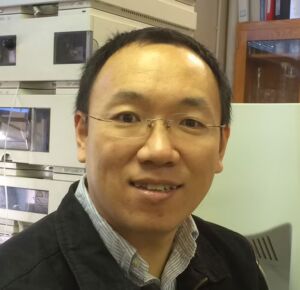
Kun Lu, the study’s corresponding author and a professor of environmental sciences and engineering at UNC’s Gillings School of Global Public Health, said the findings underscore the importance of looking broadly at environmental influences on children’s health.
“This work shows the power of high-resolution exposomics to better understand the complex mixture of chemical exposures in early life,” said Lu.