

Tar Heel Mice Unveil the Importance of the Microbiome in Drug-Induced Gut Toxicity
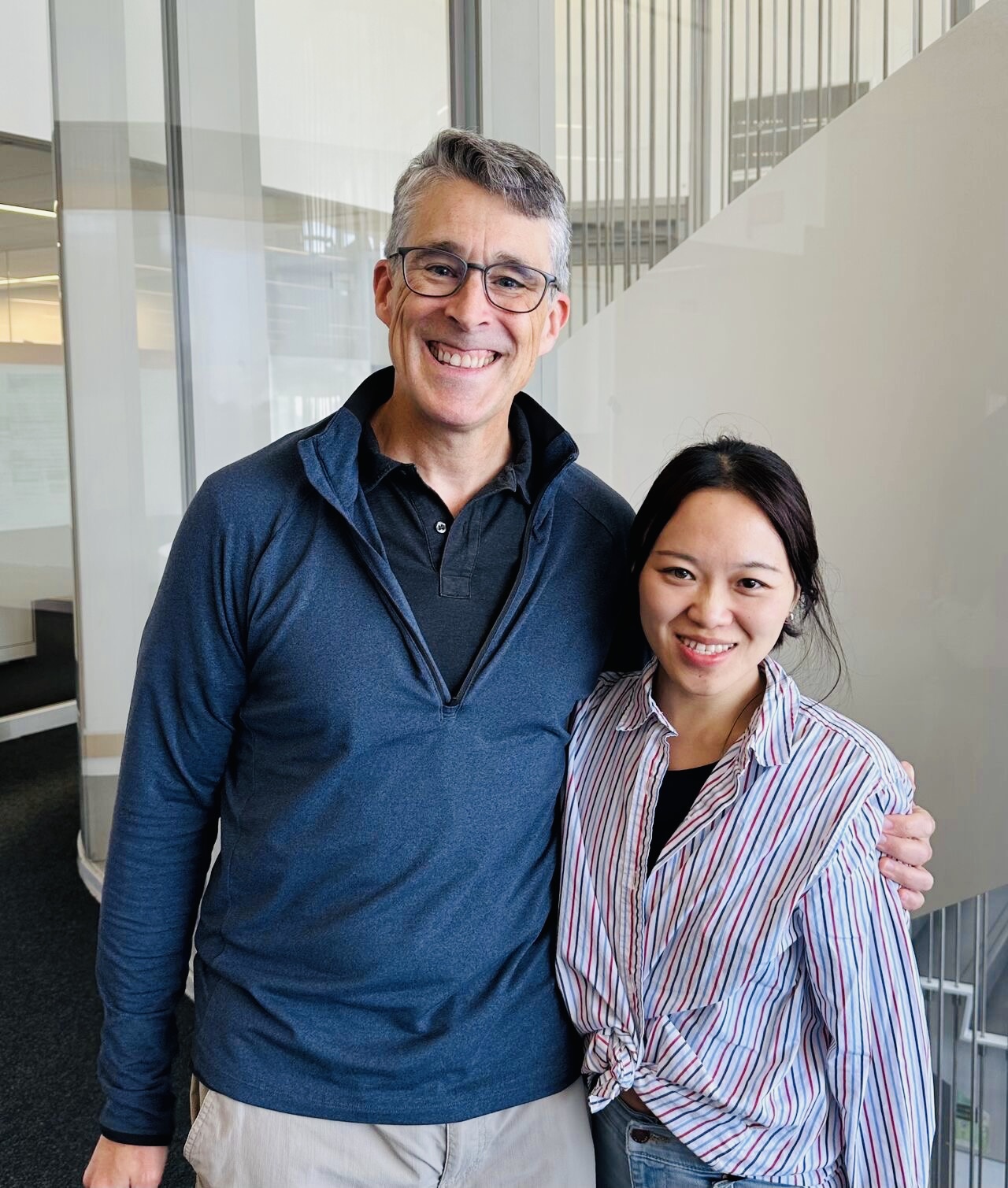
Kenan Distinguished Professor of Chemistry Matthew Redinbo and his former postdoctoral fellow, Jianan Zhang, found that differences in the microbiome of mice affected their susceptibility to drug-induced gut toxicity.
April 8, 2026 | By Amie Solosky
Every day, millions of people take common pain relievers like ibuprofen to ease headaches and sore muscles. However, these pain relievers come with risk because such nonsteroidal anti-inflammatory drugs (NSAIDs) may cause gut toxicity, like intestinal ulcers. Researchers in Professor Matthew Redinbo’s Lab in the Department of Chemistry at UNC-Chapel Hill, along with collaborators in the School of Medicine, have discovered that differences in gut bacteria, collectively known as the microbiome, may help explain why some people experience more gut toxicity than others.
The study, “Commercially purchased and in-house bred C57BL/6 mice with different gut microbiota exhibit distinct indomethacin-induced toxicities,” published in Gut Microbes Reports, shows how two types of mice treated with indomethacin (one type of NSAID) experienced different levels of gut toxicity. Specifically, they compared mice bred in-house, fittingly named Tar Heel mice, and commercially bred mice from Charles River Laboratories to determine whether breeding-site led to differences in drug-induced gut toxicity.
Despite the popularity of these over-the-counter drugs, scientists still do not fully understand why drug-induced gut toxicity occurs. Dr. Zhang, a former postdoctoral fellow in the Redinbo Lab at UNC and the lead author of the study, suggested that differences in the mice used to study gut toxicity may further complicate the issue, motivating her to isolate some of these variables.
“I have been working on mouse studies for years, and the gut microbiome is one of the factors that’s influencing our outcomes,” she said. “All the mice have different gut microbiota, so when it comes to drug metabolism and drug-induced toxicity, they can respond differently.” Dr. Zhang is now an Assistant Professor at UC Davis.
The results of the study confirmed Dr. Zhang’s hypothesis: mice bred in different environments harbor distinct initial gut microbiota and, consequently, face different levels of gut–and non-gut– toxicity after exposure to an identical dose of indomethacin. The Tar Heel mice had higher amounts of a certain type of bacteria that produces an enzyme called β-glucuronidase, which affects how long drugs and nutrients stay in the gut. However, when there is too much β-glucuronidase, it can keep chemicals—like NSAIDS—in the intestines for too long, causing gut toxicity.
Not only were the observed bacteria in the gut different for the two types of mice, but the severity of the gut toxicity was much higher in the Tar Heel mice. The researchers observed greater weight loss, increased intestinal ulcerations and higher fecal lipocalin-2 levels, a marker that signals inflammation in the Tar Heel mice compared to the commercial mice—all hallmarks of gut toxicity.
Zhang warns that the findings point to a larger issue: humans also have diverse microbiota and may not respond uniformly to standard NSAID dosages. “There are tens of thousands of people per year who die from gut toxicity due to these drugs,” she said. “NSAIDs are available over the counter, so there is an urgent need for more personalized medicine or at least more precise dosing.”
Personalized medicine considers a patient’s unique genetic profile, lifestyle, body type and environmental factors. Zhang suggests that the two traditional doses, children and adults, may not be sufficient in mitigating the risk associated with drug-induced gut toxicity. While gut toxicity is relatively rare, additional steps could be taken to better protect consumers.
In addition to revealing the importance of personalized medicine, the Tar Heel mice findings also highlight that vendor-specific differences in breeding can influence the results of pharmaceutical studies. This study emphasizes that the mouse source and gut microbiome composition should be incorporated into preclinical drug study design for new drugs.
“Dr. Zhang’s work pinpoints specific gut microbial features, such as those that produce higher amounts of β-glucuronidase, that drive NSAID-induced gut toxicity. These results may lead to improved outcomes with these most widely used drugs in the world,” said Matthew Redinbo, Kenan Distinguished Professor of Chemistry, Biochemistry and Microbiology.